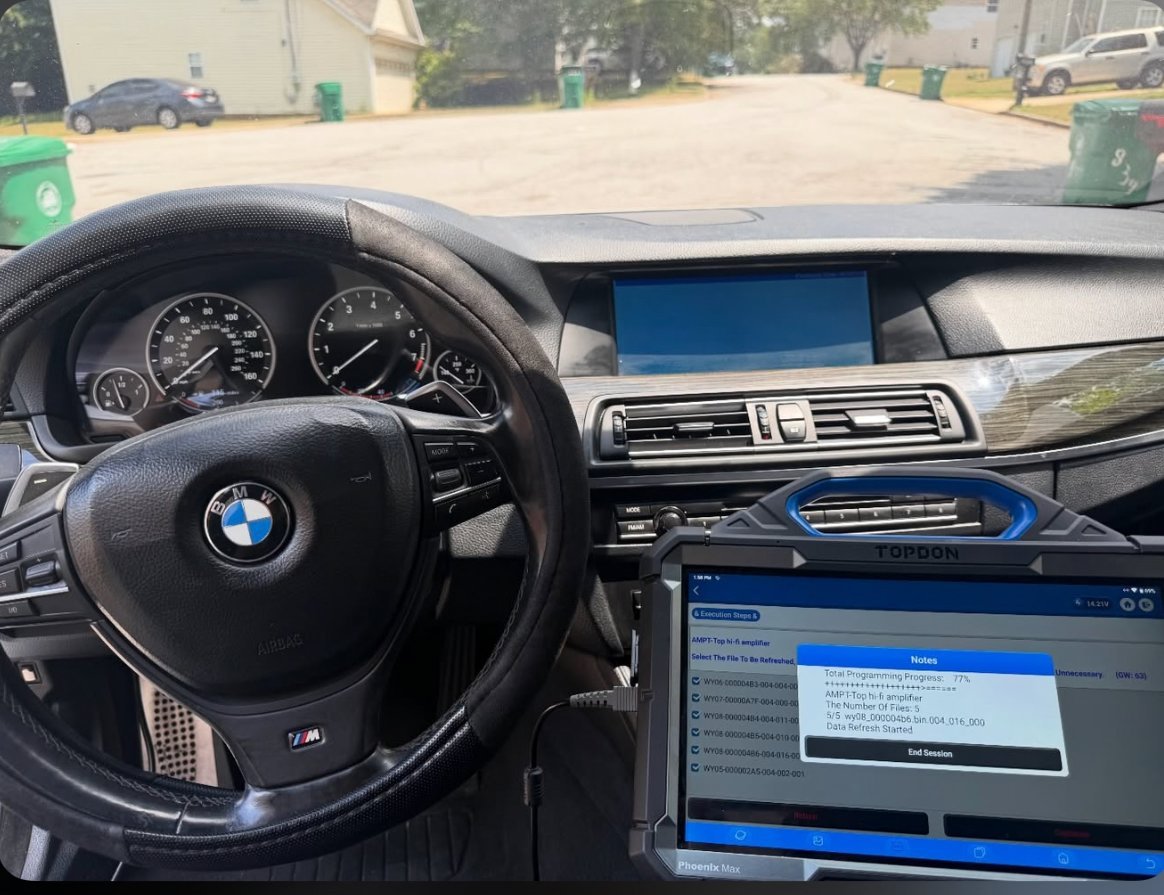
BMW & Euro
BMW Battery Registration: Why It Matters
Installing a new battery in a BMW is only half the job. Without registration, the vehicle can mis-manage the new battery — and you may never know until it fails early.

Installing a new battery in a BMW is only half the job. Without registration, the vehicle can mis-manage the new battery — and you may never know until it fails early.
Many BMWs use intelligent battery management. The vehicle tracks the battery's age, capacity, and type so its charging strategy can adapt as the battery ages. When you install a new battery without telling the vehicle, the charging system may continue treating it like the old, aged battery.
Registration tells the vehicle: "This is a new battery of this type and capacity." From there, the charging strategy starts fresh — which is what allows the system to manage the battery correctly over its life.
BMW battery management is sensitive to the battery's type (such as AGM versus a conventional lead-acid battery) and its capacity. Replacing an AGM battery with a conventional one, or changing capacity, requires the vehicle to be told what's installed — otherwise the charging strategy is based on incorrect information.
This is why simply "putting a new battery in" isn't the complete job on many BMWs. The registration step is part of doing it right.
The takeaway: On many BMWs, battery registration isn't optional — it's part of a correct battery replacement. It protects the new battery and keeps the charging system working as designed.
Send us your year and model and we'll take care of the coding and registration.